Choose the best cordless car tyre pump UK option by checking the job first

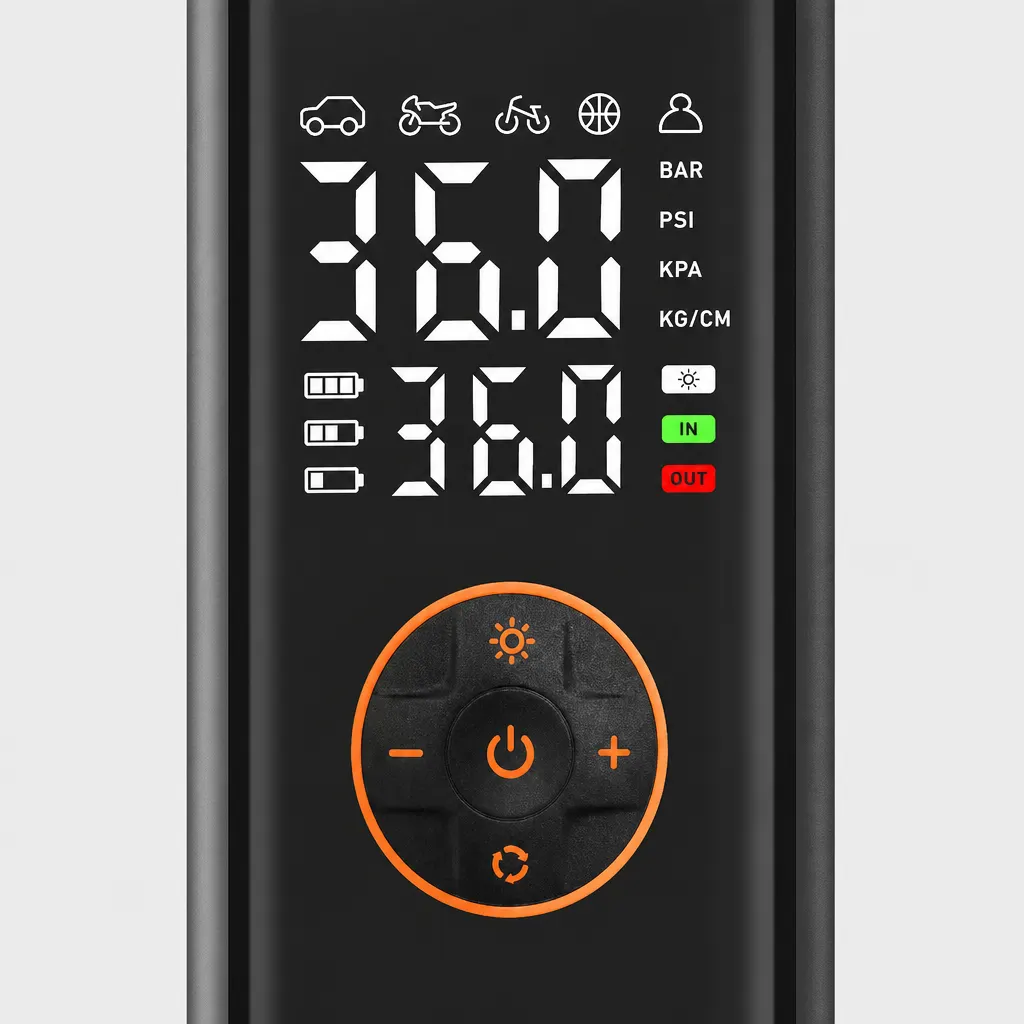
The best cordless car tyre pump UK choice is not automatically the one with the longest feature list. Start by checking that the device has a suitable connection for your car, a pressure display you can understand, and instructions that explain how to set and check the required pressure. The Wireless Car Tyre Inflator with Colour Display is documented as a wireless configuration with a digital pressure display and built-in lighting. Those facts make it worth considering for a driver who wants to check or top up a tyre without finding a fixed air machine, but they do not by themselves prove suitability for every vehicle.
The buyer’s decision is therefore quite practical. If you want something for an occasional check at home, on a driveway or in a workplace car park, compare the documented setup with your vehicle handbook and tyre information first. If you are dealing with a visibly damaged tyre, a suspected puncture or a warning that returns soon after inflation, an inflator is not a repair. It may help with a pressure check, but the car still needs an appropriate inspection before you treat it as ready for a normal journey.
Set the UK pre-journey job before comparing cordless pumps
A useful comparison begins with the moment when you expect to use the pump. A driver leaving a home in Manchester for work has a different practical problem from someone checking a car in a Birmingham workplace car park before a long trip. In both settings, the immediate job is to understand the tyre pressure and act on the vehicle manufacturer’s recommended figure rather than guessing from how the tyre looks. A wireless design can be relevant when you do not want to depend on a fixed forecourt machine, but convenience should not replace checking the correct target.
Think about the setting as well as the journey. At home, you may have time to read the instructions and confirm the connection before you need it. In a car park or low-light situation, the built-in lighting feature may be useful when locating the valve or handling the device, while the colour-display configuration and digital pressure display may make the information easier to identify. The available facts do not state the brightness, screen size, battery duration or inflation speed, so those should remain questions to verify rather than assumptions in your comparison.
Check the documented setup against your car and valve
Before choosing any cordless car tyre pump, confirm the basic connection details for the vehicle you actually drive. Look for clear instructions covering the intended car valve, how the connector is attached, how pressure is selected and how the device indicates the reading. The product information supplied here identifies a wireless car tyre inflator, but it does not list connector types, pressure units, operating range or a contents list. That gap matters: a digital display and lighting feature cannot confirm that the physical connection will suit your tyre.
Use your vehicle handbook, the tyre-pressure label for the car and the product’s own instructions together. Do not select a target because it appears on another vehicle, because the tyre looks firm or because a previous reading was different. If you also want to use the device on a bicycle or ball, treat those as separate checks rather than assuming included adapters. No accessories are documented in the supplied facts, so confirm what is actually included before relying on the pump for anything beyond the intended car-tyre task.
Use the display and lighting features for a clear pressure check
The strongest documented reasons to consider this particular configuration are its digital pressure display, colour-display format and built-in lighting feature. For a buyer, the important question is not whether those labels sound impressive, but whether they fit the way the task will be done. You need to know which pressure unit the display uses, whether the instructions explain changing or interpreting it, and whether the screen can be read from the position where you will stand beside the tyre. Those details are not provided in the frozen product facts, so check them before purchase.
The lighting feature may be relevant when a tyre needs attention in a dim garage, on a driveway after work or in a workplace car park during a dark winter evening. It should be treated as help with visibility, not as evidence that the whole roadside situation is safe or that the device can replace proper vehicle equipment. Likewise, a displayed pressure is a useful piece of information, but it does not diagnose a puncture, sidewall damage or a faulty valve. Stop and investigate if the reading behaves unexpectedly or pressure falls again.
Compare cordless convenience with the limits of the documented facts
Cordless operation can remove one obvious inconvenience: you are not tied to a fixed petrol-station air point while checking the tyre. That may suit someone who wants to prepare a car at home or keep an option available for an unexpected low-pressure warning. However, the supplied information does not document battery capacity, charging method, charging time, operating duration or storage guidance. A responsible comparison must therefore ask how the device is charged, how readiness is checked and what the instructions say about keeping it available between uses.
This is where a buyer should resist filling in missing details with marketing assumptions. Wireless does not automatically mean small, fast, quiet or ready whenever you need it. The product facts do not state the dimensions or weight either, so do not assume it will fit a particular glovebox, door pocket or boot compartment. Check the actual measurements and the intended storage arrangement before buying. If your main requirement is a pump that can be carried in a very specific space, size is a decision point still needing confirmation.
Recognise when a cordless tyre pump is the wrong answer
A low-pressure warning deserves attention, but inflation is not the same as repair. If the tyre is visibly damaged, has lost pressure repeatedly, or appears to have suffered a puncture, do not use a pump as a reason to continue driving without an inspection. The product information does not claim puncture repair, tyre diagnosis or any safety certification. It only documents a wireless inflator with a digital pressure display and built-in lighting. That makes it important to separate the job of adding air from the job of finding out why air was lost.
There are other mismatches to identify before purchase. This option may not suit you if you need documented high-pressure or high-volume performance, a confirmed range of valve adapters, a specified battery runtime or a particular physical size, because those facts are not supplied. It may also be unsuitable if you want a complete emergency kit and the listing does not confirm additional contents. Buyers with a specific vehicle, unusual tyre arrangement or strict storage requirement should pause and obtain those details rather than treating the product title as a complete specification.
Run this car-park comparison checklist before buying
Use the following sequence at a home driveway, garage entrance or workplace car park. First, write down the vehicle manufacturer’s recommended pressure and identify the tyre valve. Second, check the product instructions for the connection, pressure units and operating steps. Third, confirm the actual size and weight if the inflator must fit a named boot compartment or storage box. Fourth, check the product contents rather than assuming adapters, a cable or a case are included. These checks keep the decision tied to the task instead of to vague promises about portability.
Next, consider the environment in which you will use it: daylight, a dim garage, a wet driveway or a roadside stop. Confirm what the built-in lighting is intended to do and whether the display remains understandable in that setting. Finally, check the aftercare requirements, including charging, cleaning, storage and any instructions about cooling or use between tyres. Only then compare cordless convenience with relying on a forecourt machine or garage. The supplied product facts confirm the wireless format, digital pressure display and built-in lighting, but all other practical details need verification.
Follow a measured inflation sequence rather than guessing
When the device and vehicle appear compatible, begin with the car parked in a suitable place and the tyre accessible. Read the manufacturer’s recommended pressure, inspect the tyre visually and attach the connector as described by the product instructions. Use the digital pressure display to understand the starting reading, then follow the documented controls for adding air. Work deliberately rather than relying on the tyre’s appearance. If the connection does not seal, the reading is unclear or the pressure changes in an unexpected way, stop and resolve that issue instead of repeatedly inflating.
After the adjustment, check the reading again and compare it with the vehicle’s recommended figure. Look at the tyre and valve for signs that the original problem remains, and do not treat a temporary change as proof that the car is ready for a long trip. If pressure drops again, or if damage is visible, arrange appropriate professional attention. The built-in lighting can assist visibility in a darker setting, but it does not change the need for a careful inspection or make a damaged tyre suitable for driving.
Take the next step by matching the listing to your exact use
Before buying, make a short two-column comparison. Under “confirmed”, record the facts supplied for this model: wireless configuration, colour display, digital pressure display and built-in lighting. Under “still to verify”, record the car-valve connection, pressure range and units, included contents, dimensions, weight, charging method, battery guidance and instructions for use. This format makes the decision clearer because it shows what the listing establishes and what remains important to your vehicle or storage arrangement. It also prevents a general desire for convenience from being mistaken for proof of compatibility.
If the confirmed features match your intended setting and the outstanding questions are answered by the full listing or instructions, the Wireless Car Tyre Inflator with Colour Display can be considered as a cordless option for checking and topping up a car tyre. If those details cannot be confirmed, keep comparing rather than choosing on the word “best” alone. Whichever device you select, keep the vehicle’s recommended pressure to hand, check the tyre before a significant journey and treat recurring pressure loss or visible damage as a reason for inspection rather than another inflation cycle.