
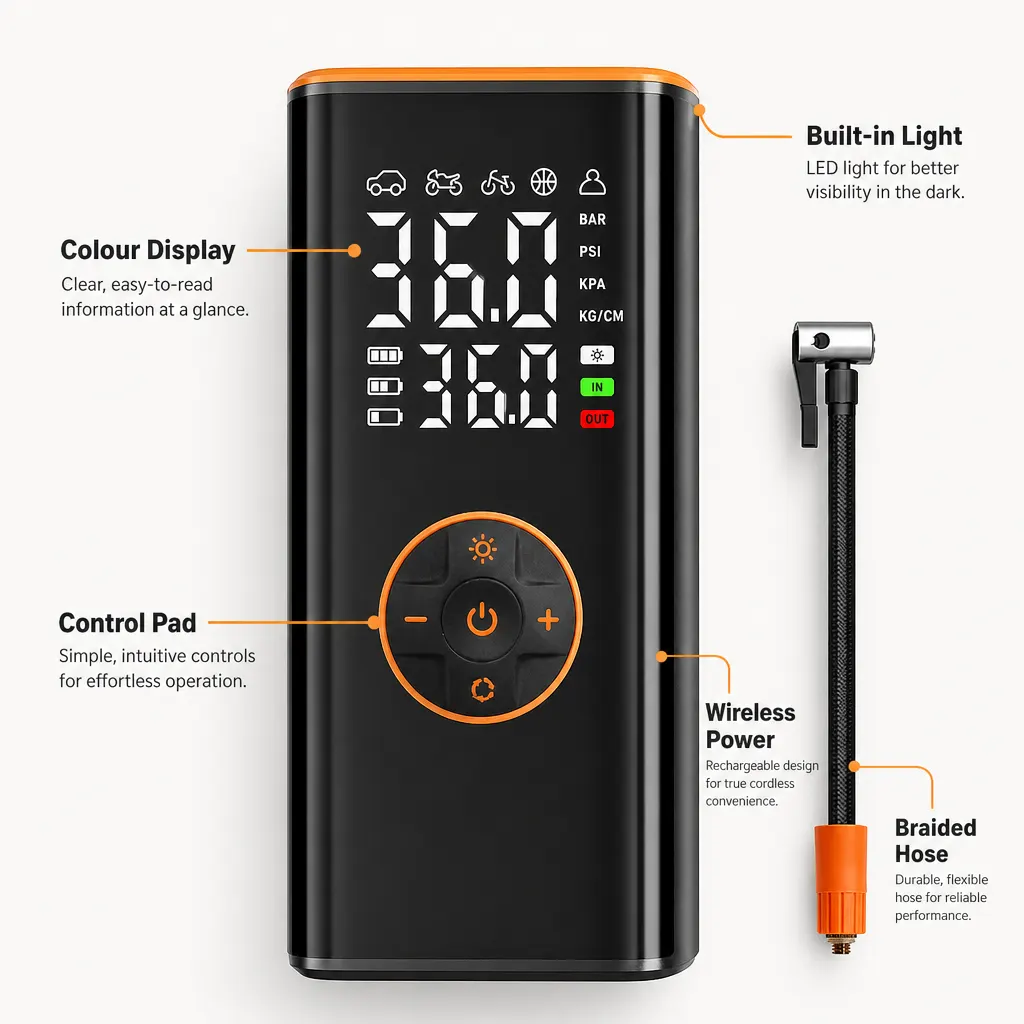
Short answer: Cordless versus 12V is a power question, not a complete performance comparison. Compressordual lists a wireless car tyre inflator with a colour-display configuration, digital pressure display and built-in lighting. It does not state a battery capacity, charger, runtime, 12V lead, pressure range, display units, connector or automatic stop. A 12V alternative must be checked against the same fields rather than assumed to be stronger or easier. Use the vehicle handbook for the target pressure, then compare how each candidate connects, stays ready, fits the car and handles the actual inflation task.
Separate power from performance
A cordless label tells you how a product is presented, while 12V tells you to investigate a vehicle-supply arrangement on the other candidate. Neither label supplies the pressure range, connector, display units or usable session length. For the Compressordual item, the page confirms wireless configuration but does not explain the charging path or whether a lead is supplied. Keep those as open comparison fields.
| Comparison field | Compressordual listing | What the 12V candidate must show |
|---|---|---|
| Power | Wireless configuration | Socket, cable and supply requirements |
| Pressure readout | Digital pressure display | Units and reading method |
| Readiness | Battery and charging not stated | Cable reach and vehicle power availability |
| Fit | Valve connection not stated | Connector and instructions |
Let the vehicle set the target
The Highway Code requires tyres to be correctly inflated to the vehicle manufacturer's specification for the load carried and says pressure checks should be made when tyres are cold. Under-inflation and over-inflation can adversely affect braking and steering. A cordless or 12V decision comes after that target is known; it does not replace the vehicle's information.
- Write down the cold pressure for the relevant tyre position and load.
- Identify the valve connection and the units you expect to read.
- Check how each product is powered, charged or connected in the intended location.
- Reject an option if an essential field remains undocumented.
Do not turn silence into a winner
The current Compressordual page does not publish inflation speed, maximum pressure, battery capacity, runtime, duty cycle, noise or the number of tyres possible per charge. For those parameters, manufacturer does not specify the values in the supplied listing. A fair cordless-versus-12V article can identify the questions, but it cannot award a performance winner without comparable documentation.
Choose the workflow you can maintain
The practical difference may appear between uses: a wireless unit needs a confirmed charging routine, while a 12V model needs a usable socket and enough cable reach for the tyre. The Compressordual page does not settle its charging method or lead contents. Compare the routine you can actually maintain, especially if the inflator is meant to wait in a boot for an occasional low-pressure warning.
Related guides and product details
Choose cordless or 12V only after both candidates document the connection, pressure information and readiness routine your car needs. Read Dedicated Car Tyre Inflator, Not a Jump Starter for related guidance. Read Does a Portable Tyre Inflator Auto-Stop? for related guidance. Review the documented specification on the Wireless Car Tyre Inflator with Colour Display product page before ordering.
Sources and safety context
- Supports the wireless configuration, digital pressure display and lighting, while leaving battery and lead details unstated Current Compressordual product page.
- Supports vehicle-specific pressure checks when tyres are cold and the effect of incorrect inflation The Highway Code, Annex 6: Vehicle maintenance, safety and security.