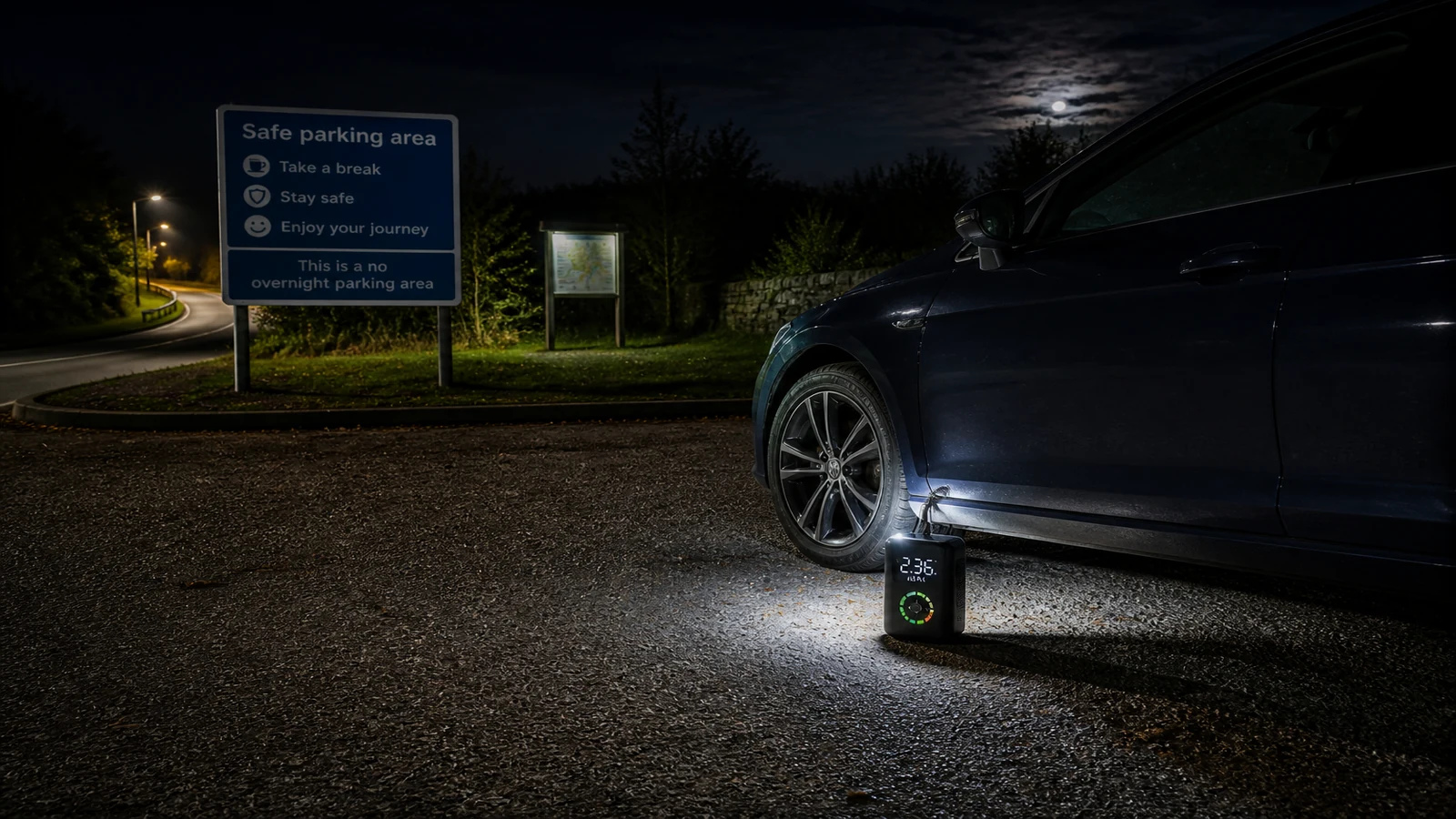
Short answer: A built-in light may make a tyre valve or display easier to see after dark, but it does not make every lay-by or roadside stop safe for working. Compressordual lists a Wireless Car Tyre Inflator with Colour Display with built-in lighting and a digital pressure display. The page does not publish light output, runtime, pressure range, connector, battery or automatic-stop behaviour. If you discover a flat or damaged tyre, follow the Highway Code: stop as soon as it is safe, work only when you can do so without risk, and call breakdown support when the location or condition is unsafe.
Key takeaways
- Built-in lighting is documented, but its brightness, runtime and safety role are not.
- A lay-by is not automatically a safe place to inflate or inspect a tyre.
- Use the vehicle pressure data and seek recovery help when working roadside would be risky.
Light improves visibility, not the roadside situation
The Compressordual page lists built-in lighting alongside a wireless colour-display configuration and digital pressure display. That can be relevant when locating the valve or seeing the controls in low light. It does not tell you whether a particular lay-by has enough separation from moving traffic, whether the ground is suitable, or whether the light is bright enough for the task. Those are separate decisions.
| Question | What this listing supports | What remains open |
|---|---|---|
| Visibility | Built-in lighting feature | Brightness, beam and runtime |
| Pressure reading | Digital pressure display | Units, range and accuracy |
| Power | Wireless configuration | Battery, charging and readiness |
| Roadside use | No safety certification stated | Whether the location is safe to work in |
Decide whether to work at all
The Highway Code says that if you have a flat tyre, you should stop as soon as it is safe to do so and only change it when you can avoid putting yourself or others at risk; otherwise call a breakdown service. The same judgement applies before reaching for an inflator. Traffic speed, visibility, weather, lighting, hard shoulder rules and the tyre's condition can all make a roadside job inappropriate.
- Move to the safest available location without creating a new hazard.
- Turn on the vehicle's hazard warning lights where appropriate.
- Assess traffic, ground, weather and visibility before opening the boot.
- Call breakdown support if the location or tyre condition is unsafe.
- Use the inflator only when the vehicle is safely parked and the instructions fit.
Use the display for one defined check
When the vehicle is safely parked, use the handbook or vehicle data for the correct cold pressure. The product page confirms a digital pressure display but does not identify the units, range or automatic-stop function. Read the instructions, connect as directed and monitor the result. A light can reduce the need to hold a phone torch, but it cannot validate the reading or prove that a damaged tyre is safe.
Do not buy on a night-time promise
Manufacturer does not specify the light output, operating duration, weather protection, battery capacity, pressure range, connector or roadside-use limitations on the current page. If after-dark use is central to the purchase, request those details and consider the wider breakdown plan as well. A small light-equipped inflator is not a substitute for a safe stopping decision or recovery cover.
Related guides and product details
Treat the built-in light as a visibility aid only; the safe choice may be to leave the tyre alone and call for recovery. Read Portable Car Air Compressor Without a 12V Lead for related guidance. Read Portable Air Compressor for Car Tyres: Buying Checks for related guidance. Review the documented specification on the Wireless Car Tyre Inflator with Colour Display product page before ordering.
Sources and safety context
- Supports the built-in lighting, wireless configuration and digital pressure display, without publishing light or roadside limits Current Compressordual product page.
- Supports stopping only when safe and calling a breakdown service when roadside work would put people at risk The Highway Code, Annex 6: Vehicle maintenance, safety and security.